


7 Areas Where Philosophers Will Be Needed (and already are!)
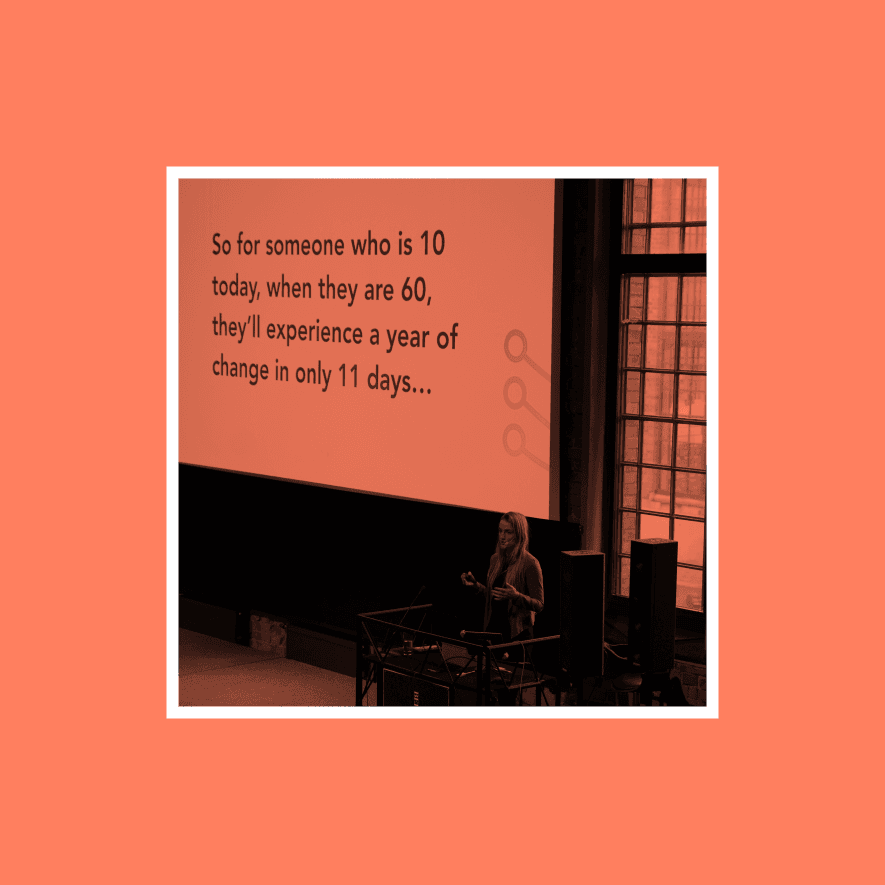
We are now in an era of hyper-change. Back in the 1950’s, everything from world population, GDP, carbon dioxide, to telecommunications started to develop at an accelerating pace – and it is just changing faster and faster. This is called the Great Acceleration. So what happens when things are shaking? We search for guiding principles as we redefine our work, economic systems and ethical standpoints.
We might not think about it, but the core foundations of our societies are rooted in ancient philosophy. Our politics, governance and Western scientific viewpoints are all based on philosophical schools of thought.
Aristotle laid the foundation for the scientific system. John Stuart Mill’s utilitarianism (to maximise total happiness for as many people as possible) serves as the basis for many political ideologies. And our democracies were all born from philosophical ideas.
This is where philosophy comes in. During the COVID-19 pandemic, healthcare turned to moral philosophy to determine how to prioritise and make tough decisions. Today, we are facing new challenges with AI, longevity, automation and climate injustice.
Here are seven areas where I believe we will need philosophers in the future (and where they are useful already!).
1. Teaching AI morality and ethics
As AI becomes more autonomous and powerful, ensuring that we teach it moral behaviour is key. “With great power comes great responsibility” is more true than ever. Interestingly, the new EU AI Act is also based on this rationale, imposing varying levels of responsibility on organisations depending on the level of risk and power their AI systems entail.
As AI becomes embedded in decision-making, philosophers will play a critical role in defining two things: what it means to be “responsible” as professionals use AI in their decision-making process; and what the rules should be as decision making becomes automated by AI. Both of these areas of work will cover concepts such as fairness, accountability, transparency, value alignment, and the boundaries of machine autonomy.
Philosophers have debated morality for centuries, highlighting the pitfalls to look out for. As we define the decision rules for AI, we need people who truly understand morality and ethics to ensure our AI systems are as safe as possible.
Want to help your team increase the skills needed in the age of AI? Check out Philosophy at Work’s thinking skill workshops for your organisation.
2. Understanding future implications of emerging technologies
With new technological inventions, unexpected side effects are likely to occur. In the early days of Facebook, who would have known it would become one of the largest news distributors in the world, leading up to court trials?
Similarly, with emergent technologies today, we don’t know what they can become. If we race without stopping to ask ourselves these important questions, we can potentially hit a wall later on. We should ask important questions such as:
- Are we racing towards what we want to become, or are we developing into something unintentional outside of our control?
- Are our actions as a company aligned with our intentions and long-term goals?
- Are we running towards a future we want, or is the future happening to us?
- What ethical dilemmas might we face in the future and how can we address them before they become a fact?
Philosophers are trained in logic and to critically examine every single aspect. That practice of thinking rigorously helps them understand how things fit into a bigger picture and makes them well-placed to grapple with questions like those above.
Combining critical thinking with the latest foresight methods can help you make sense of emergent technologies before it is too late.
Seeking guidance from philosophers, futurists and other professionals skilled philosophical thinking skills might prevent you from ending up in trouble for not foreseeing the implications of your invention.
3. Helping companies navigate ethical dilemmas from new tech
Technological advancements are moving faster than our laws. As we adapt to new technologies, the regulatory guidelines often don’t exist yet.
And nobody wants to be left behind, so we all race to adopt new technologies whilst trying to navigate an unregulated, undefined playground.
One example of an ethical dilemma companies will face is when implementing AI hiring systems. How should you balance accuracy and diversity whilst streamlining work efficiencies? And which demographic group will benefit more than another in your new automated candidate screening system?
Some companies may not prioritise ethics. But it is wise to do so. Because when the law eventually catches up, it typically favours ethical behaviour (well, hopefully). Then your company will already be ahead, derisking future legal implications.
How can philosophy help organisations navigate ethical dilemmas, then? Philosophy offers the framework for discussing ethics and morality. By dissecting ethics from multiple philosophical schools of thought simultaneously, you can gain a 360 view of a dilemma and can make better decisions.
Learn more in my podcast episode “Four approaches to navigate ethics in AI and business” – an interview with Ethics Manager Ben Wilberforce-Ritchie, and discover frameworks for building skill in ethics with Philosophy at Work’s Ethics Labs.
4. Redefining meaningful work in an AI-automated world
According to Asana, knowledge workers spend 60 per cent of their time on “work about work”. These are tasks like chasing updates, attending unnecessary meetings, and switching between tools.
Is chasing updates and attending poorly structured meetings meaningful work? No. Yet, we call it work.
As automation transforms – and removes – jobs, philosophers can help organisations to rethink what “meaningful work” looks like and how we can build value beyond traditional employment. Why are so many tasks considered work if we pay someone else to do them, but not if we do them ourselves?
I remember when my CEO friend told me she was jealous of the gardener she had hired. She was staying indoors in her countryside house, working her CEO job, when she’d rather be outside, doing the gardening work herself.
Instead, she paid someone else to do it when she could have taken a few hours off her regular work to do it herself. But that wouldn’t have been considered work in our society today. Isn’t that a bit strange when you think of it?
As AI takes over our jobs, we will need to completely rethink how we measure and value work. Philosophers can guide policy-makers and politicians as we transform into a new economy post-automation.
5. Filling the void for religious meaning and guidance
I recently listened to a talk by a Venezuelan Stoic, who shared his personal story of how he decided to “come out as an atheist” in a catholic family. As he grew up, he decided for himself that he did not believe in a God and could no longer stay catholic.
Whilst his decision made him live more authentically, it did cause some negatives – for example, he lacked the guidance and meaning that religion had comforted him with in the past.
So he started searching for alternatives. And eventually he found the same type of support and guidance in Stoic philosophy – but without the religious parts.
Stoicism is a philosophy that teaches focusing on what you can control, accepting what you cannot, and cultivating inner calm through reason. It emphasises living in accordance with virtue – with wisdom, courage, justice, and self-discipline – as the path to a good life. At its core, it’s about training your mind to respond thoughtfully rather than react emotionally.
We are seeing a global trend in which religion is declining and secularism is rising. According to Pew Research, between 2010 and 2020, the share of people affiliated with any religion dropped by at least 5 percentage points in 35 countries – including a 13-point decline in the U.S.
Say what you want about religion, but having guidance and basic rules to lean on makes humans feel safe. The lack can make humans feel lost and overwhelmed.
As religion continues to decline, philosophy can provide a support system to guide our actions, without believing in a God.
6. Defining ethical tradeoffs in biohacking and longevity
We’re in the midst of a longevity race. Science has a real chance of “curing” ageing during our lifetime.
Imagine living to be 200 years old. That will impact our societies in every single way – our education system, pension system, labour market dynamics, food systems, a completely new demographic landscape – and not to mention reproduction.
We’ll have to ask some important questions. What is right and wrong in this society? Is it right to prevent people from having kids, if we live longer?
Is it right that a new, larger, and older generation will have so much more democratic power over the young generation? How do we distribute wealth and food in a society where we can live for hundreds of years? And what happens with those who do not want to stop ageing?
Moral philosophy will play an important role in the future as we redefine ethics in a society where people live for hundreds of years.
7. Determining climate ethics and intergenerational justice
According to science-based futures agency Planethon, climate changes aren’t equally distributed across the world. We are experiencing climate inequality. Depending on where you live, you will be impacted differently.
This fact gives rise to new societal governance challenges, at both global and local scales. A concrete example is deciding which communities we should relocate first when rising sea levels make entire coastal areas uninhabitable – and who should pay for that relocation.
Also, those in power are not the ones who will suffer the future consequences of their poor climate actions.
Is it time to rethink the democratic system and give kids a voice, as they are the ones who will pay for the actions of today? Philosophers can help redefine justice in a new, extraordinary era.
In what other ways do you foresee us needing philosophers in the future? Feel free to comment to share your thoughts!
Bio
Maria Selting Theorell is a tech philosopher, futurist and fractional CMO with over 15 years of experience in the tech and AI industry, spanning companies such as iZettle by PayPal, Stravito and Lingio. Through her company Phuturist, she delivers thought-provoking talks and workshops on the future, tech philosophy, AI ethics and how to thrive in an increasingly complex world.As host of the futurist podcast Unbox Your World, she explores the intersection of philosophy and technology. Read more at phuturist.se.the thinking skills workshops Philosophy at Work delivers in businesses, start a conversation with us here.
Further reading
Be more strategic
Swimming upstream with strategy veteran and Salmon Labs founder, Rob Estreitinho. Dr. Brennan Jacoby and Rob discuss all things strategic thinking.

Slow thinking with Tom Freeman
In an age of ever-faster tech iterations, what might we gain from practicing slow thinking? In this conversation with Philosophy at Work, Headspace’s Tom Freeman explores tech, wellbeing and intentionality


