

Dr. Brennan Jacoby sat down with the strategist and Founder of Salmon Labs – Rob Estreitinho to discuss all things strategic thinking. Rob is not only a world class strategist – he also has a background in philosophy and his approach to strategic thinking is incredibly down to earth.
Digesting the below conversation will help you clarify the nuts and bolts of strategic thinking while sparking fresh ideas. You’ll leave better informed about well-formed problem solving and equipped with practical steps you can take to enhance your own strategic thinking.
Brennan: Rob, what has been your journey to this point in your career?
Rob: I’ve always been quite experimental as a person. I was the classic kid that if you were to give me a way of doing things, I’d say, “yeah, yeah, yeah, I’ll try that later, but let me try this in 17 other ways first.” And what’s interesting about that is that over the years, what I thought was a flaw in my character turned out to be quite a good asset. It was the fact that I am not really classically trained in what you might call ‘brand strategy’ or ‘communication strategy’.
Since being in London, I’ve worked on all sorts of agencies. I’ve worked in social media agencies, small advertising agencies, big advertising agencies. I’ve worked in brand consultancies, and I’ve spent six and a half years in what is now the biggest independent agency group called VCCP Group, where I learned a lot about all effectiveness, the many ways in which advertising works, and how to think about research qualitatively and quantitatively.
Since about two years ago, I started a business called Salmon Labs, which I run with my wife. It’s a strategy studio that helps restless brands swim against the odds by finding the spine in their strategy.
Finding a spine in your strategy means a strategy that can hold itself and has enough stature and rigor behind it. But also sometimes finding a spine in something is actually removing the thing you don’t want to be there.
I’m not very good at showing up and saying, “you should do this”. I am very good at sitting down with someone and, through some sort of philosophical inquiry, getting to the answer together. And that’s what I mean about finding the spine. I’m not saying I will come up with the spine. I’m not saying I will reinvent the spine, necessarily. I am there to help you find it.
Brennan: Wow, so much there that I’m looking forward to unpicking with you around philosophy and your approach. To go a bit deeper, let’s clarify a few concepts. We’re talking about strategy and strategic thinking. Can you share more about how you think about strategy?
Rob: I like how Mark Pollard talks about strategy being an “informed way to win”. Thinking about strategy as an informed way to win is very simple, but it packs so much in. ‘Informed’ because you can’t just guess your way into it. You need to do research, you need to diagnose what’s going on, etc. The ‘way’ part is you need some sort of path. You can’t just say ‘my strategy is to be the best consultant in the world’. That’s not an informed way to win. It is a statement of what winning looks like, although a not very good one, but it doesn’t tell you anything about the path. And then the ‘win’ part, because that is not always clear, right?
So for example, I’m preparing a communication strategy training session that I’m doing in Lisbon. And I was just going through all sorts of kind of case studies. If you know your advertising history, you’ll remember the Sainsbury’s Try Something New campaign. The original brief back in 2004 was that they needed to make $2.5 billion in incremental revenue over the next three years. People can’t even imagine what a billion is. So how do you do that?
In that case, the planner or the strategist on the job did some maths based on the kind of habitual consumption of Sainsbury’s customers. They worked out that, really, all they needed to do was get each of those customers to spend an extra £1.14 a week. And so they reframed the role of communications from, you know, make the brand so attractive that we’ll end up making 2.5 billion in revenue to instead getting people to spend a little extra every week. And so the Try Something New campaign emerged.
Now, that for me is a very good example of how winning doesn’t mean this huge mountain of 2.5 billion, it just means nudging people to try something new every single week.
Brennan: It strikes me that there’s probably people digesting this conversation who,.
like myself, are not strategists, but sometimes are told that in their work they need to be more strategic. That doesn’t always mean they need to come up with a strategy. Rarely, in fact, does it mean that. Given what you’ve unpacked, help us think differently about what it means to ‘be more strategic’.
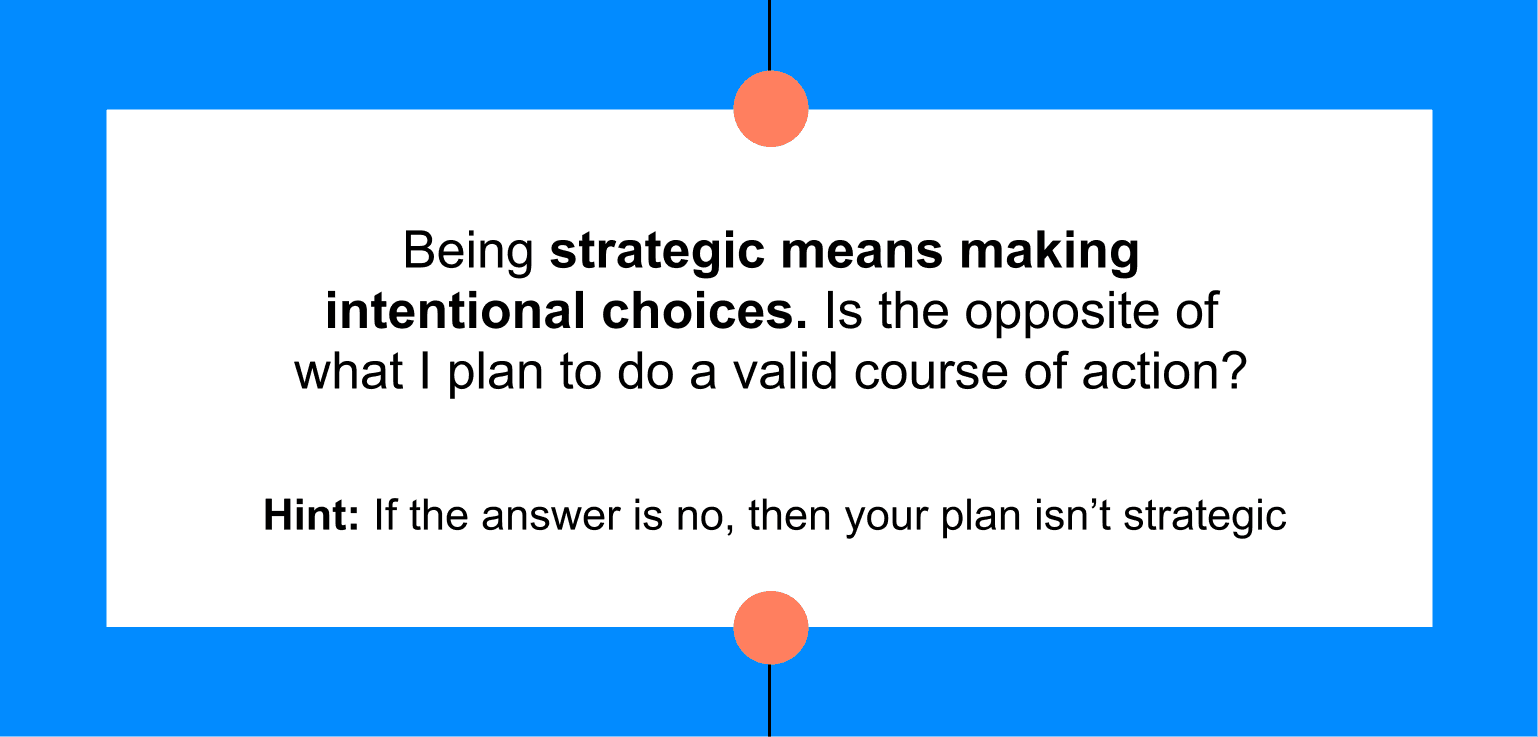
Rob: Whenever someone says things are ‘strategic’, essentially it’s about needing to make choices and having a rationale as to why those choices were made. In simple terms, being strategic is about explaining why we’re doing some things and not other things. The caveat to that is that the opposite of those choices needs to also be valid, otherwise you weren’t intentional. If the oppositive is not a valid choice, you’ve only said a truism about something that should happen anyway.
Brennan: I know you have a background in philosophy as well. How has philosophy informed how you do strategy?
Rob: For this one, we go back to my 11th grade. In Portugal, when you come to 11th grade (at least back when I was in secondary school), you’re offered the choice of: do you want to learn French or do you want to learn philosophy? Why those are the two choices beats me, but I was like, ‘oh god, I don’t really want to learn another language, so I’m gonna go with this philosophy thing’.
The teacher won me over on day one, where he basically said, look, most of the other classes are interested in you getting to the right answer. With this one, I don’t believe in a single right answer, I just believe in a logical kind of thought process to get to the answers. Little 14-year-old me thought that was brilliant. What a lovely way to not have to study, right?
Thinking about the reasons backing up your thinking became a bit of a template for me. My body rejects when people say there’s a right answer and a wrong answer, because the world’s more complicated than that. There’s probably least wrong answers in life, but there’s never a perfectly correct answer in all circumstances. So, obviously, that gets us into things like ethics which are far more than a single conversation could help us get through. But it became a really important template for how I think about things like creativity, strategy, advertising and marketing.
I’ll give you an example. We’re both self-employed. A lot of what we do is basically, we have a hunch or a hypothesis, we try and validate it, we launch a new workshop product, it may take off or it may not. That doesn’t mean we didn’t do the due diligence, it’s just we don’t know until we do it. Looking back, something that philosophy taught me is that all we have are thought experiments and scenarios, and we will only know if they are true or effective once we actually try them.
Brennan: What I hear you saying is the philosophizing is only really being done when we step out and we try things. One question that that strikes me, though, listening to you is whether strategy is all just relative. Does anything go as long as you can show how you arrived at your conclusion?
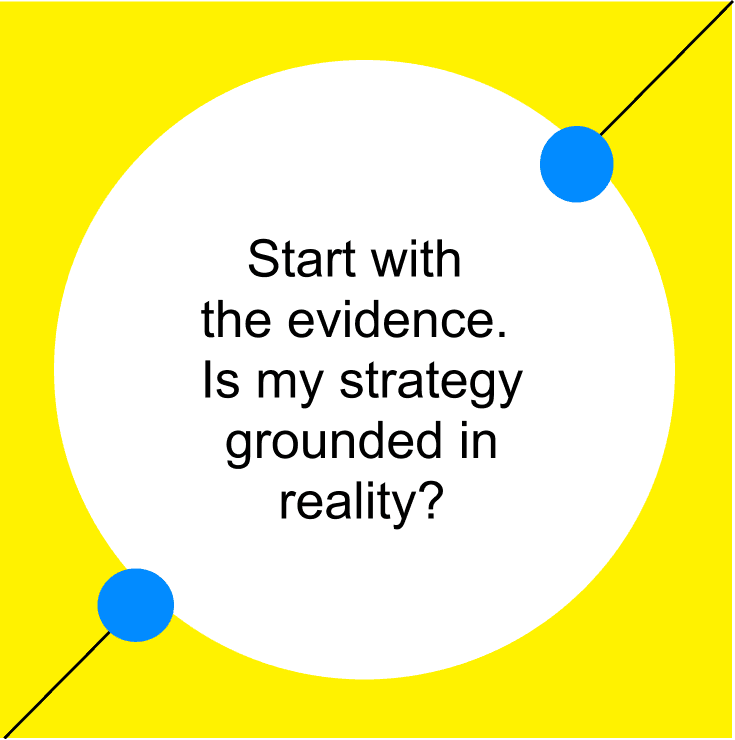
Rob: I’m not saying anything goes. It’s more that you should establish some of the agreed things in the industry based on empirical, or at least credible evidence. And then within that, you still have your choices. But I find those choices fascinating because one of the things I now think a lot about is that mental models for making choices are less about making the right choices. It’s more about making the choice that most people agree with. And I know that creates a bit of an ethical dilemma because sometimes people agree with the wrong thing, but we’re working with human systems and companies, right? I may have the right strategy, but if I can’t persuade anyone else in the business, then it’s inconsequential. And so, there is a degree of, like, yeah, sure, anything goes, as long as you can persuade your stakeholders to do it.
Brennan: So, strategy is not relative because you have to prove your way to conclusions, but that there’s not just one optimal conclusion or way to get there. Back to choice. If I’m understanding you correctly, an unstrategic choice would still be a choice, but it would be one that would be uninformed, or just made in a reactive way, or made in a way where we’re not clear on the outcomes. Or made in a way that has no impact whatsoever, right?
Rob: So remember, strategy is having an informed way to win. It’s not strategic if your ways is informed but you can’t prove it did anything. It’s not strategic if it’s a way to win but you just guessed your way there. And it’s not strategic if your plan is just something you thought of which is not informed and not impactful. I like that definition because it gives you the core ingredients.
Brennan: For those of us that aren’t strategists, but want to benefit from being more strategic in our work, are there questions that you’d say we should keep in mind?
Rob: There are two things…well, three things – there’s always three. (Rule number one, if you want to sound strategic, always say there are three things! It makes you feel very rounded and considered.) In this case, I do think there are three things.
First, a lot of the times when people say ‘be more strategic’, all they’re asking is for you to think of the end game. So start there and work backwards. What is the benefit to the business? A useful way of thinking about the end game is to consider inputs, outputs, and outcomes. The number of calls you joined is an input. For example, we had this conversation – I turned up, we talked – that’s an input. The output might be something like, we produced a 10-episode series of these conversations, if we were to do that. But the outcome is what happened as a result of the input and output. For example, because of the series we made, we secured three workshop sessions with clients who were interested in bringing some of these concepts into their work. People don’t often think in terms of inputs, outputs and outcomes. We just go, ‘right, what are you doing this year? Well, you know, I’m thinking of hosting three events and, I’m going to launch 17 new Meta campaigns, etc.’. That’s the inputs and a little bit of outputs, but what’s the outcome of those things? So that’s the first thing, just start with the end game. What is the outcome of what you’re trying to do, and how far can you use the building blocks to go?
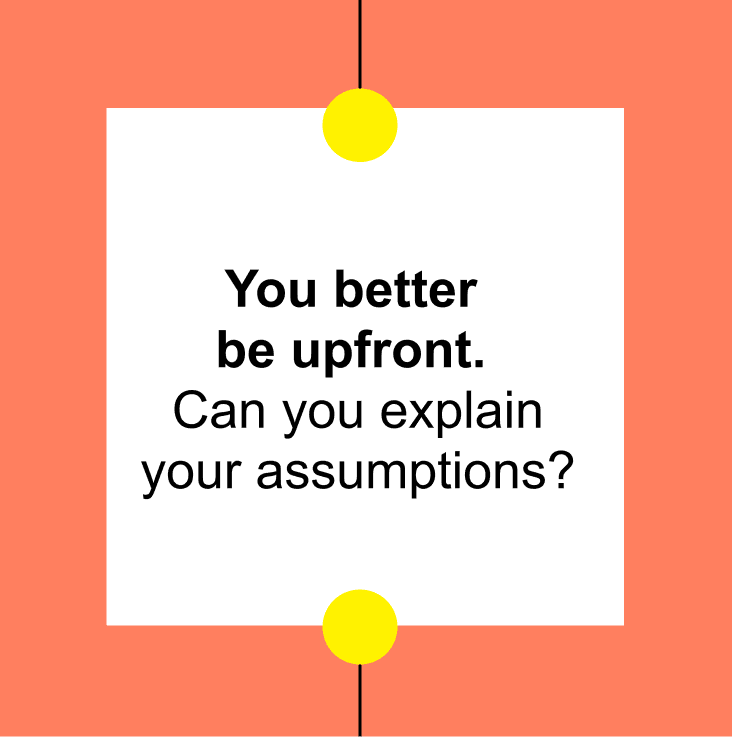
The second and third things I always think a lot about when it comes to making strategic choices are two words: ‘by’ and ‘because’. ‘By’is an important word because businesses are basically saying, ‘right, we want to grow our sales by 20%, and we think we can do that by targeting these particular groups of people’. The ‘by’ bit is really important. We’re gonna do this by doing that. That is how we’re going to achieve our goal. And then the ‘because’ is the reason why people should believe you or do the thing that you want to do. I think those three concepts go a long, long way: the end game, the way you get there (the ‘by’), and the reason people should believe you (the ‘because’).
Brennan: Thank you for tying everything back into pragmatic, practical rules that don’t just apply to strategists Rob, but apply to all of us. In particular, I love that point that when we’re being strategic, we’re choosing. That alone is enough to help me think about where am I not being strategic. Thank you again.
To continue benefiting from Rob’s strategic thinking, you can:
- Subscribe to his newsletter
- Join the Salmon Crew, his strategy collective
- Learn more about Salmon Labs, his strategy studio
Illustration by Pierre Buttin
Some good questions
Further reading
Power People
and Process
In conversation with Jess Majekodunmi and Dan Kiernan about the intersection of AI and work

7 Areas Where Philosophers Will be Needed
We are now in an era of hyper-change. This is called the Great Acceleration. So what happens when things are shaking?


